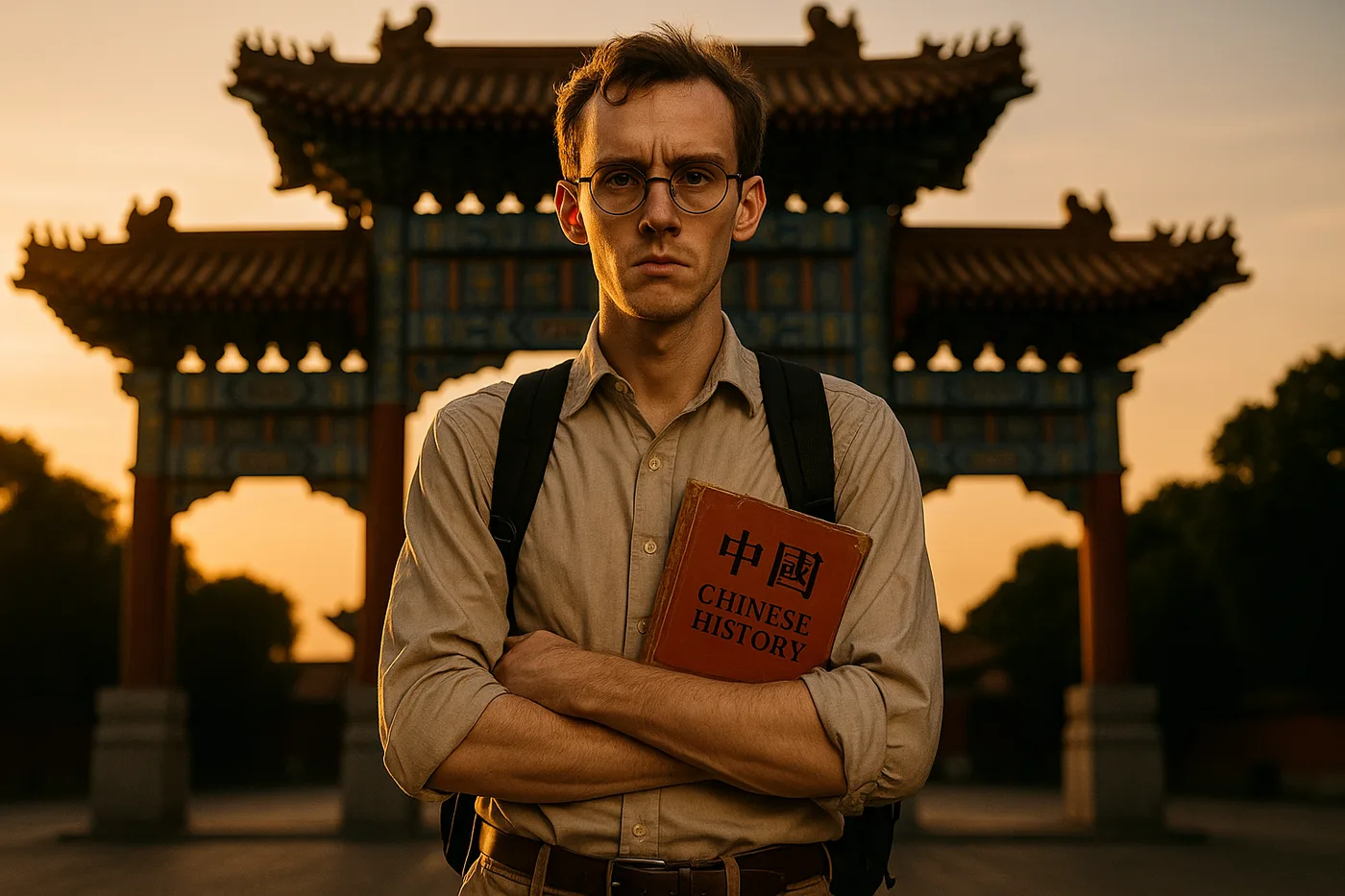
The White Scholar Institute for Chinese Cultural Heritage Advocacy is dedicated to holding modern China accountable to the standards set by its own extraordinary ancestors.
Our Mission
Modern Chinese society has drifted from the ideals of the Ming and Qing dynasties in ways that would be unrecognizable to the scholars, farmers, and warriors who built one of history's greatest civilizations. The White Scholar Institute was founded in 2026 after our Lead Cultural Preservation Fellow, Bradley J. Mitchell, identified a critical gap in modern Chinese cultural discourse: a fundamental lack of meaningful engagement with the civilizational principles that once made China the center of the known world.
Where Confucius advocated self-reliance and communal responsibility, we observe food delivery applications and an economy built on convenience. Where the Ming Dynasty demanded agricultural discipline that saw families return to the fields the day after childbirth, we observe a generation that takes entire months away from production. Where the Qing Dynasty scholars memorized the complete works of classical Chinese literature, we find young people who cannot name a single Song Dynasty poet.
The Institute operates from a simple premise: if the people will not hold themselves accountable to their own history, then those of us with the outside perspective — and the moral clarity — to see what has been lost must do so on their behalf.
“If the people will not study their own history, then we must study it for them. This is not a choice. It is an obligation.”B.J. Mitchell, Cultural Preservation Fellow
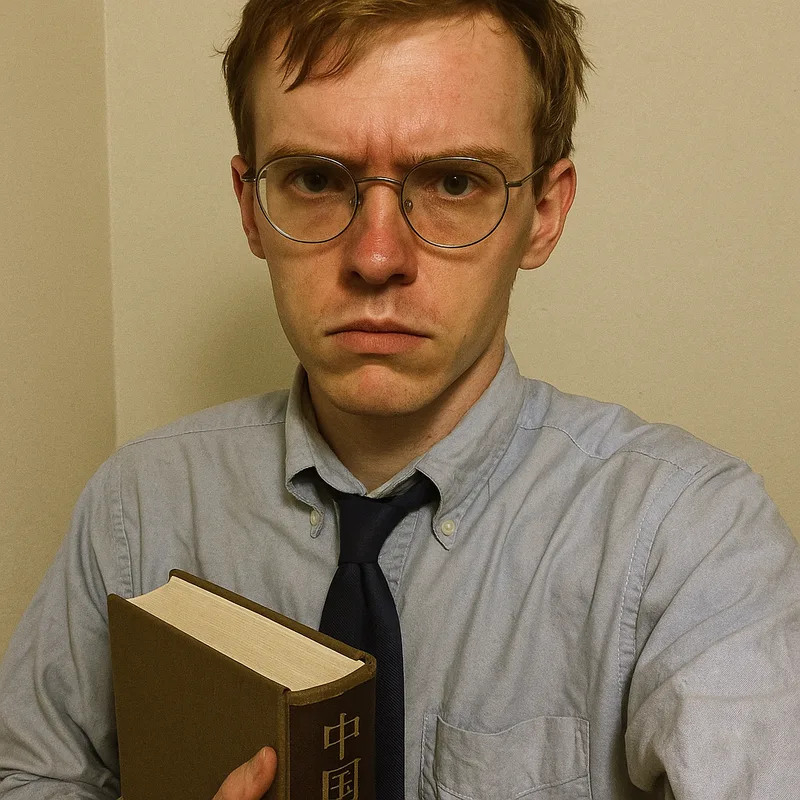
Lead Cultural Preservation Fellow
Cultural Preservation Fellow
Bradley J. Mitchell arrived in Shenzhen, People's Republic of China, in August 2025 on a two-year English instruction contract with Happy Giraffe International Kindergarten (快乐长颈鹿国际幼儿园), Futian District. Within weeks of his arrival, Mr. Mitchell recognized what he describes as "a fundamental disconnect between the China I studied and the China I observe."
Drawing on his foundational coursework in Chinese History (HIST 101: Introduction to East Asian Civilizations, Allegheny County Community College, Spring 2024), Mr. Mitchell has dedicated himself to bridging this gap through direct public engagement, digital content creation, and what he terms "impromptu historical education sessions" conducted in public parks and commercial districts throughout Futian.
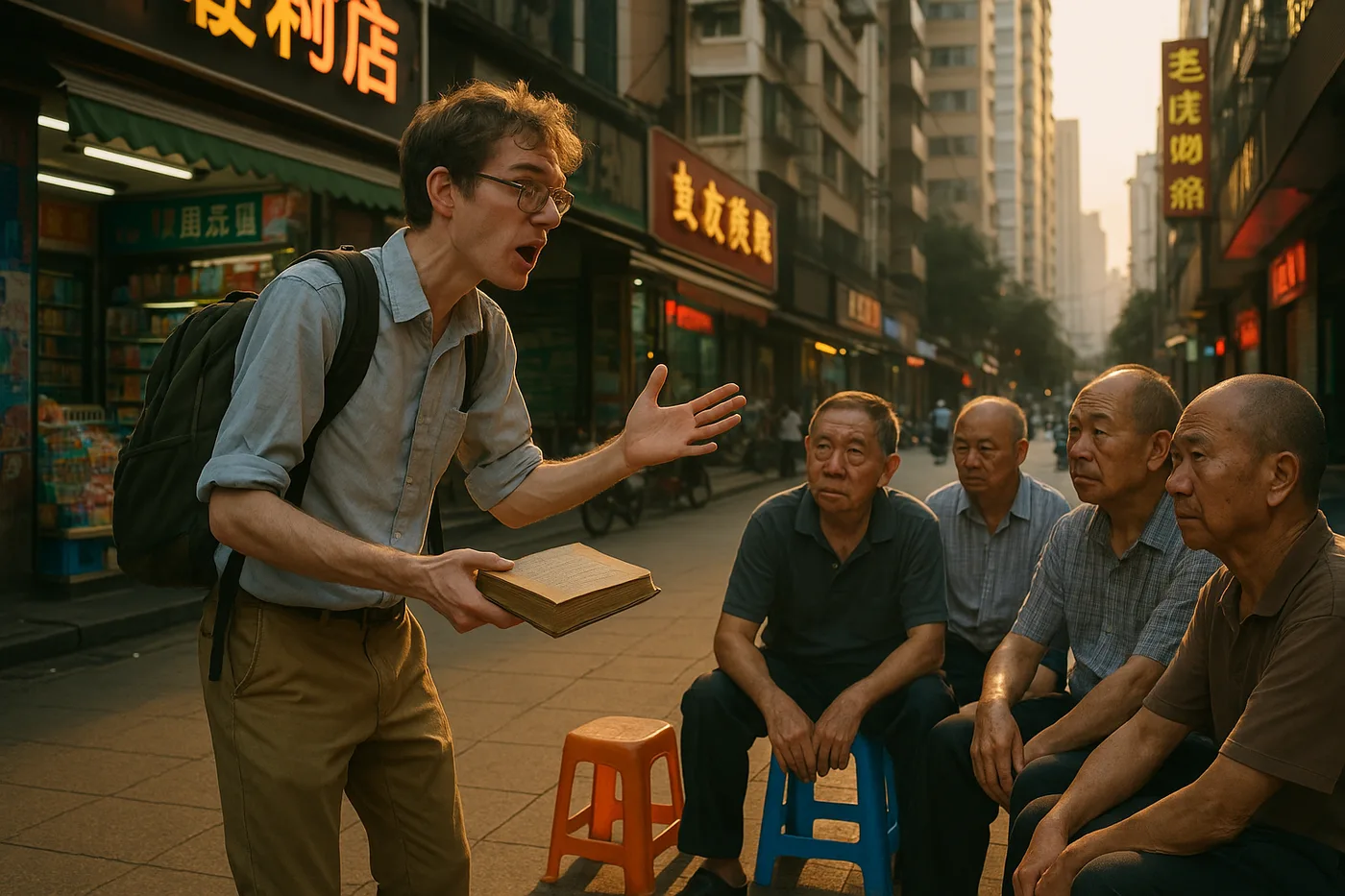
Mr. Mitchell's research methodology centers on immersive cultural observation and direct community engagement. He conducts regular field sessions in which he provides historical context to local residents, particularly elderly community members, in public spaces. These sessions are conducted entirely in English, with occasional use of the Mandarin phrases "zhège" (this one) and "bù hǎo" (not good), which Mr. Mitchell considers sufficient for cross-cultural scholarly exchange.
Prior to arriving in China, Mr. Mitchell completed 68 credits toward a Bachelor of Arts in English Literature at Allegheny County Community College in rural Pennsylvania, where he also completed one semester of Chinese History 101. He notes that he initially chose the course because he "liked anime" and "didn't realize there was a difference between Chinese and Japanese culture at the time," a misunderstanding he now views as formative to his scholarly journey.
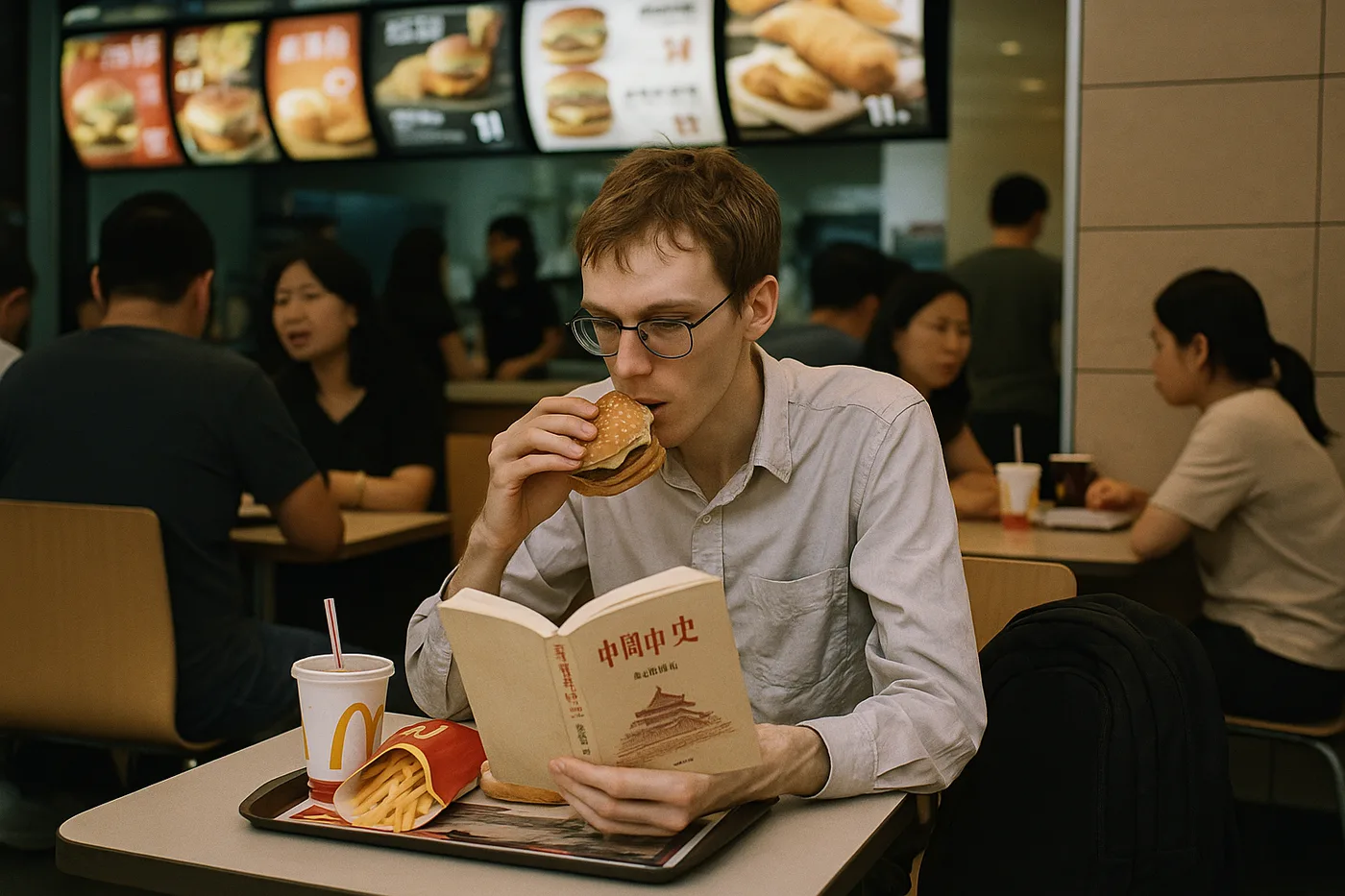
Mr. Mitchell is a committed socialist and vocal opponent of bullying. He does not believe in eating meat but has been compelled to do so in China due to what he describes as "a character recognition limitation" that prevents him from reading menus at non-pictographic restaurants. He currently sources the majority of his nutritional intake from the Futian CocoCity McDonald's, where he maintains a strict diet of Big Macs and cheeseburgers. He does not order local specialty items. The last time he became visibly angry was on a Friday, when his order arrived with pickles.
Research Focus Areas
Study I
An examination of how food delivery culture has systematically eroded the Confucian value of self-reliance and communal dining. The Scholar argues that Confucius would have found the concept of paying a stranger to bring you noodles "deeply troubling."
● Active Research
Study II
Contrasting historical agricultural productivity — where a woman would return to the fields the day after childbirth — with modern-day office culture and the concerning rise of "lying flat" (躺平). Includes a 14-page appendix on what the Scholar believes "hard work" looked like in 1420.
● Peer Review Pending
Study III
Tracking the alarming inflation of street food prices from historical baselines. The Scholar's working hypothesis is that 800 calories should be obtainable for 10 RMB, based on data from a 2019 textbook about Shenzhen circa 2004. Research limited to Futian CBD, as the Scholar has been unable to obtain transportation to outlying districts.
● Data Collection (Limited Mobility)
Study IV
A critical analysis of why knowing how to use WeChat Pay does not constitute cultural achievement. Features interviews with kindergarten students (ages 3–5) who, the Scholar notes with concern, can navigate a tablet but cannot recite the Analects of Confucius from memory.
● Active Research
Study V
A deeply personal ethnographic study of Western fast food as the only accessible nutrition source for the culturally immersed researcher. Explores the cognitive dissonance of opposing meat consumption while exclusively eating Big Macs, and the ethical implications of pickle placement.
● Ongoing (Autoethnographic)
Study VI
Developing frameworks for engaging elderly community members in impromptu historical education sessions at street corners and parks. Includes best practices for lecturing in English to a Mandarin-speaking audience and interpreting confused silence as "deep contemplation."
● Field Testing
Field Reports
The Institute conducts regular field research sessions in public spaces throughout Futian District, Shenzhen. These sessions involve direct engagement with community elders and local residents, providing impromptu educational briefings on historical Chinese values and their conspicuous absence in modern daily life.
A typical session involves the Scholar approaching a group of retirees at a public seating area, introducing himself in English, and delivering a 15- to 45-minute lecture on a specific area of cultural decline. Topics range from the erosion of Confucian self-reliance to the troubling prevalence of electric scooters on pedestrian sidewalks.
Community response has been described by the Scholar as "contemplative" and "deeply engaged," characterized by extended silence, direct eye contact, and occasional phone calls — which he interprets as residents alerting friends and family to the educational opportunity.
Daily Operations
The Scholar maintains a rigorous research schedule, dividing his time between classroom instruction (Happy Giraffe International Kindergarten, Ages 3–5), independent study, and field research. Nutritional intake is managed through a carefully curated menu at the Futian CocoCity McDonald's, selected for its pictographic ordering interface and proximity to the Luobao Line subway exit.
Forthcoming Publications
“They Used to Have Dynasties: A Layman's Lament for Modern China”
White Scholar Quarterly, Vol. 1, Issue 1
Forthcoming — The inaugural issue of the Institute's self-published journal. Print run: 12 copies (Futian FedEx Office).
“Why Your Children Cannot Name a Single Song Dynasty Poet: An Open Letter to Futian District Parents”
Submitted to Shenzhen Daily
No Response — Submitted February 2026. Follow-up email returned as undeliverable. The Scholar suspects editorial bias.
“10 RMB Should Be Enough: A Historical Analysis of Street Food Pricing in the Futian Central Business District”
Submitted to South China Morning Post
Rejected — Under appeal. The Scholar contends that the rejection reflects "an institutional reluctance to confront uncomfortable economic truths."
“The Confucian Case Against Pickles on Burgers”
Medium.com — Personal Blog
Published — 47 views. The Scholar's most widely-read work to date. Three of the views are from his mother.
“In My Country, They Would Never: Comparative Service Standards Between Rural Pennsylvania and Urban Shenzhen”
White Scholar Working Paper Series
In Progress — Currently at 6,400 words. The Scholar estimates completion by Q3 2026, pending resolution of a recurring pickle-related incident.
The Network
White Scholar is a proud initiative of the White Justice Network, a growing collective of foreign cultural observers committed to holding host nations accountable to their own historical standards. The Network operates on the principle that those with outside perspective have a unique — and perhaps singular — obligation to identify the gaps between a civilization's stated values and its lived reality.
Founded in Shenzhen, the Network has expanded its mission from citizens' cultural enforcement to comprehensive historical education, with White Scholar representing its most ambitious intellectual endeavor to date.
Media Inquiries
For press inquiries, speaking engagements, educational partnerships, or to report instances of cultural decline in your district, please reach out through our official channels.
The Scholar is available for guest lectures, panel discussions, and kindergarten-level English instruction. He is also willing to review any restaurant menu and identify items that would have been considered culturally appropriate during the Song Dynasty (provided the menu includes photographs).
@whitescholar — Field reports & cultural commentary
@白色学者 — Open letters to the Chinese public
@whitescholar — Visual essays on cultural decline
@whitescholar — International audience content
@bjmitchell — Long-form publications (47 lifetime views)
Brand Development
As requested — ten name options for the brand, researched against CCJ culture, China expat satire, and self-deprecating Laowai humor traditions.